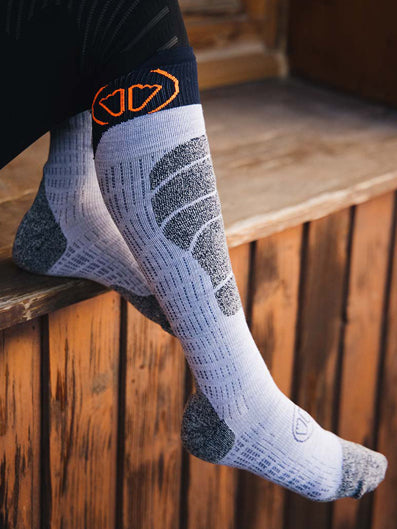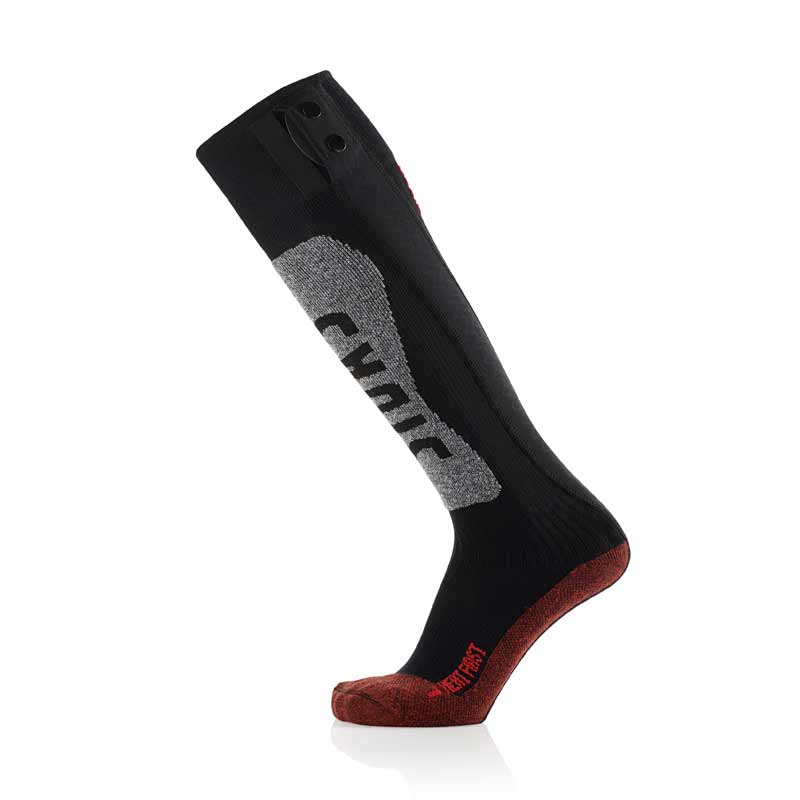




Why heated ski socks make a real difference
When you ski — especially in cold weather, at high altitudes, or during long days — your feet are subjected to severe stress: intense cold, poor circulation, numb toes, stiff boots, frequent temperature changes (chairlift, wind, snow, breaks). Even a ‘traditional’ ski sock can reach its limits: passive insulation eventually fails, moisture builds up, and the feeling of cold returns.
Heated socks provide active, constant and adjustable warmth — they keep your feet at a comfortable temperature while maintaining a good fit in the boot. The result: increased comfort, better circulation, prevention of cold, numbness and the risk of frostbite.
What Sidas heated socks offer
-
Even, targeted warmth — Thanks to thin integrated heating wire technology and optimised heat distribution, the most sensitive areas (toes, arch of the foot, soles) stay warm even when the temperature drops.
-
Maintains comfort and sensitivity in boots — These socks are thin enough not to compromise the fit: the boot remains snug and comfortable all day long.
- Enough battery life for a day of skiing — With compatible batteries (S-Pack type from Sidas), the battery life lasts a full day on the slopes with constant heat — ideal for long outings or cold days.
-
Flexibility & adjustment according to conditions — The heat can be adjusted according to the level of cold, the intensity of the effort, wear and tear or duration: climbing, chairlift, breaks — according to your needs.
-
Versatility beyond skiing — Although designed for skiing, these socks can also be used for other winter or outdoor activities: snow hiking, winter hiking, urban cold, periods of extreme cold, mountain outings or cold weather.
Who are these heated socks designed for?
- Regular or intensive skiers — piste, freeride, ski touring — especially in cold, snowy conditions or after several hours of skiing.
- People prone to cold feet, poor circulation, sensitive extremities — cold feet, numbness, risk of frostbite — for whom passive insulation is not enough.
- Those who want maximum comfort all day long — long days on the slopes, repeated descents/ascents, lifts, breaks at altitude.
- Anyone looking to combine comfort, performance and versatility — warm, comfortable, discreet, compatible with boots, suitable for skiing and various winter conditions.
Expert advice & best practices
- Pair with well-fitting footwear — to ensure proper heat distribution and an optimal fit. Boots that are too tight or poorly fitted can reduce thermal efficiency or compromise comfort.
- Adjust the heat setting according to use — high heat at the start to warm up your feet, then moderate heat to maintain a comfortable temperature without overheating — particularly useful during exercise or when you are active.
-
Take care of your socks and batteries — remove the battery before washing, wash according to the instructions, dry thoroughly, avoid fabric softener or tumble drying, check the condition of the heating wires after each season to ensure safety and longevity.
- Bring a spare pair — for long days or frequent use: have a second pair or regular shoes + socks to alternate.